Global corporations are shifting production to renewable energy use in an effort to reduce carbon emissions and aim for Net Zero.
Green transition for sustainable development has become a trend in both Vietnam and globally. According to a McKinsey report from late 2022, revenue generated from net-zero emissions products could reach up to $12 trillion per year by 2030. This indicates significant potential, with global enterprises at the forefront, seeking green and sustainable solutions.
The Race Toward Greening
Following global trends, many countries have pledged to reach net-zero emissions by 2050, including Vietnam. McKinsey’s report indicates that achieving this target will require investments of up to $9.2 trillion annually through 2050. Out of this, $6.5 trillion per year is needed for investments in low-emission assets and supporting infrastructure (factories, machinery, waste management, clean energy).
According to McKinsey, 92% of executives among more than 1,100 surveyed companies indicated they would address sustainability issues to some extent by 2026. About 42% expect to make sustainability a core value of their businesses, highlighting the critical role of “greening” in the modern economy.
Leading the way, many global giants have pioneered the green transition. For example, Apple. As reported by Yahoo Finance, Apple ranks first in the 2024 environmental-friendly list, generating $274.9 billion in sustainable revenue, representing nearly 70% of its total revenue.
Since 2015, the tech giant has reduced emissions by over 55% while increasing revenue by 64%. The company promotes renewable energy and material circularity by decarbonizing its supply chain. Apple has compelled 320 suppliers to commit to using 100% renewable energy for its products. The company also heavily invests in renewable energy and aims to achieve 100% clean electricity by 2030.
Tesla ranks second, with an estimated sustainable revenue of $81.5 billion. In 2023, 100% of Tesla’s revenue came from sustainable products and services, with 1.81 million electric vehicles sold.
The “green revolution” wave has also prompted businesses to relocate to eco-industrial parks (EIPs). EIPs support sustainable development through various energy, environmental, and emissions management solutions.
Among them, Kalundborg (Denmark) is a prime example of an EIP in the global circular economy. Kalundborg’s success lies in its collaboration among 16 public and private companies based on resource optimization principles. By-products from one company become new resources for another, adding value across companies. For example, the thermal power company supplies excess heat to other factories in the area. Today, this industrial park hosts numerous businesses in biotechnology, pharmaceuticals, and energy sectors.
South Korea also has the Ulsan Eco-Industrial Park, a pioneer in adopting clean energy standards and resource-sharing for sustainable development. Today, Ulsan hosts facilities like Hyundai’s automobile manufacturing plant and SK Energy’s energy production factory. Other nations have also developed sustainable industrial models, including Chonburi in Thailand, Nanning in China, and Sitra in Finland.
The advantage for businesses transitioning to these industrial models lies in enhanced support for optimal energy usage and reduced greenhouse gas emissions. Additionally, these countries have policies to promote “greening,” creating leverage for growth in the new business era.
Embracing the Green Industry Trend
In step with global trends, Vietnam has committed to achieving Net Zero by 2050. As industry serves as a pillar of economic development, transitioning to eco-industrial parks has become an inevitable trend. The government has formalized standards for this model through various decrees.
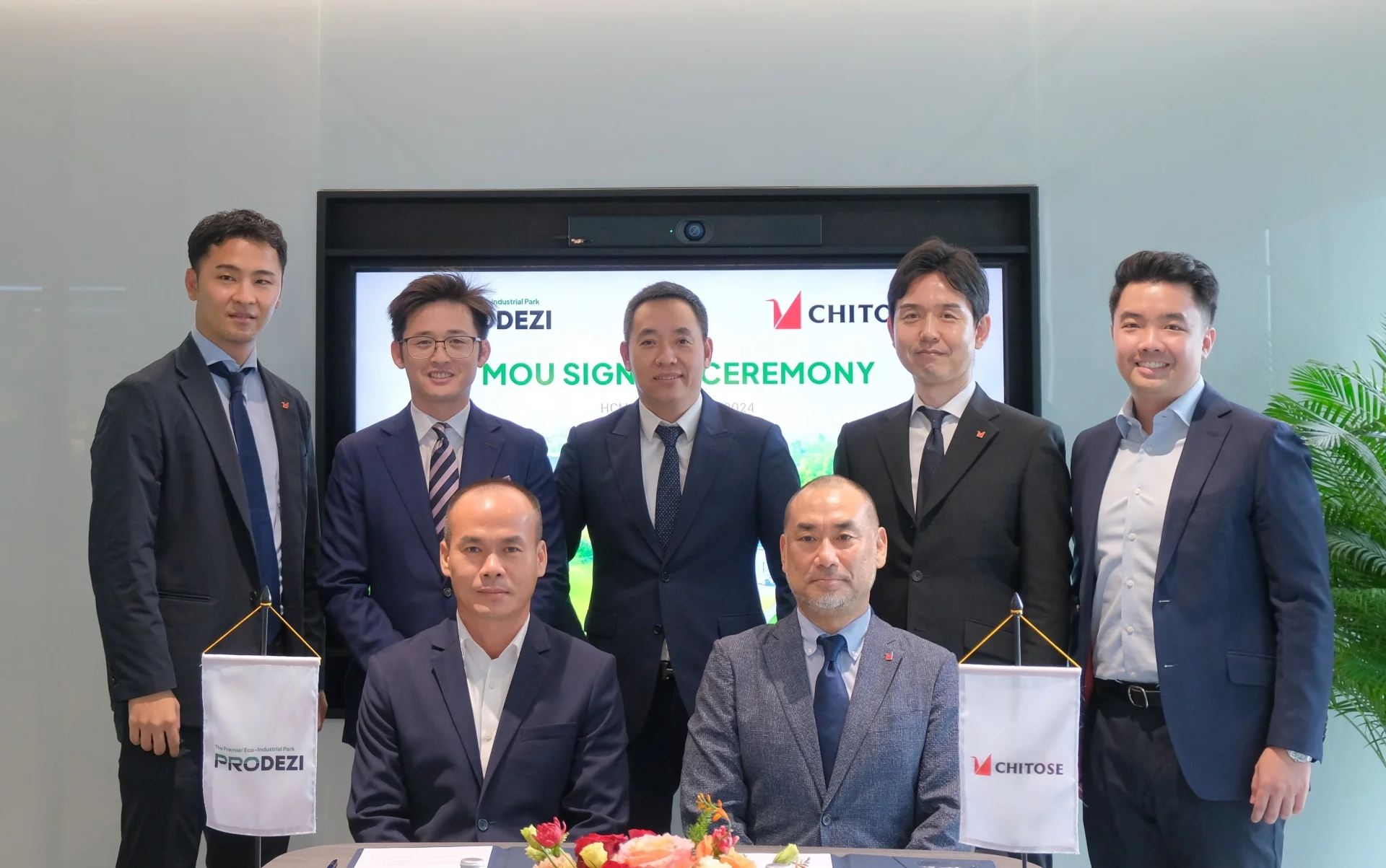
Anticipating this trend, Prodezi Long An Joint Stock Company and developer Huong Viet (HVH) have planned a pioneering eco-industrial park in the Mekong Delta. The Prodezi Eco-Industrial Park (Prodezi EIP), spanning 400 hectares, is located in Ben Luc District, Long An, just a 5-minute drive from Ho Chi Minh City via the Luong Hoa – Binh Chanh Boulevard (currently under construction).
The Prodezi investor stated that developing the eco-industrial model is based on an objective assessment of shifting global trends. Foreign Direct Investment (FDI) enterprises are increasingly attentive to ESG and sustainable development factors. These businesses are looking to move to “green zones” to gain a competitive edge in the market. “Vietnam’s push toward these factors, combined with advantages in labor costs and supportive policies, makes the EIP model highly attractive for investment,” a Prodezi representative observed.

 Location
  E-brochure
  360 Virtual Tour
  (+84) 819 236 236
  salesoffice@prodezi.vn